Your Professional Cartoning Machine Supplier in China
Neocarton is a professional manufacturer specializing in high-speed, reliable cartoning machines. Through these years, we have continually improved our machine’s mechanical design and intelligent controls, paying particular attention to the control of each critical part to ensure stable operation even under the harshest production conditions.
We provide complete standard cartoning equipment for mainstream industries, as well as customized cartoners based on your product dimensions and package configuration. No matter what cartoning machines you need, we will offer a system designed to boost your efficiency and save your money. Contact us now to discuss your packaging solutions.
Types of Cartoning Machine We Made
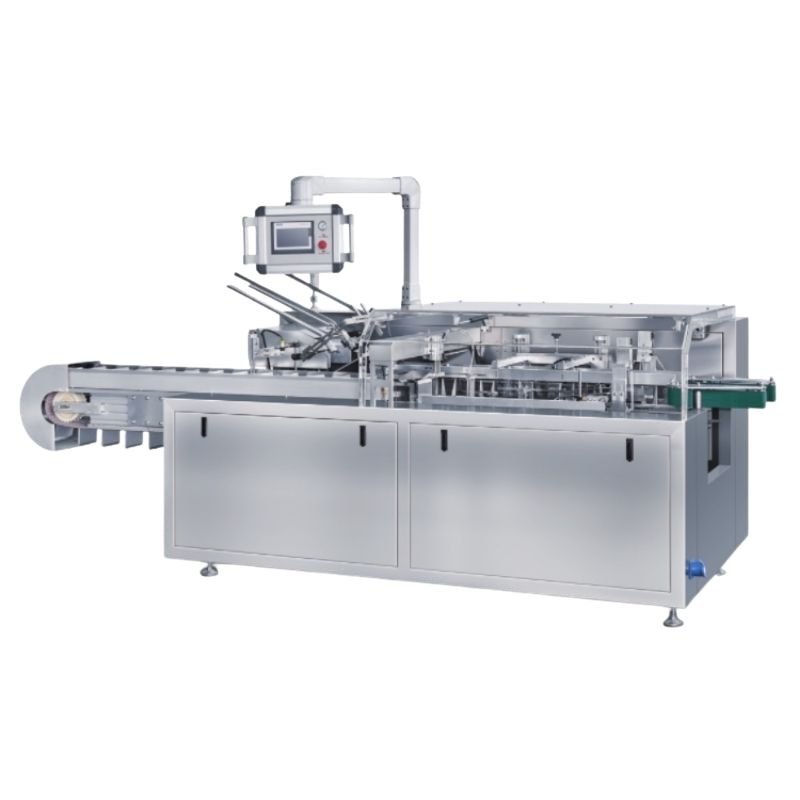
Side-loading design, stable running, suitable for bottles, blisters and various products.

Top-loading system, compact structure, ideal for granules, sachets and irregular items.
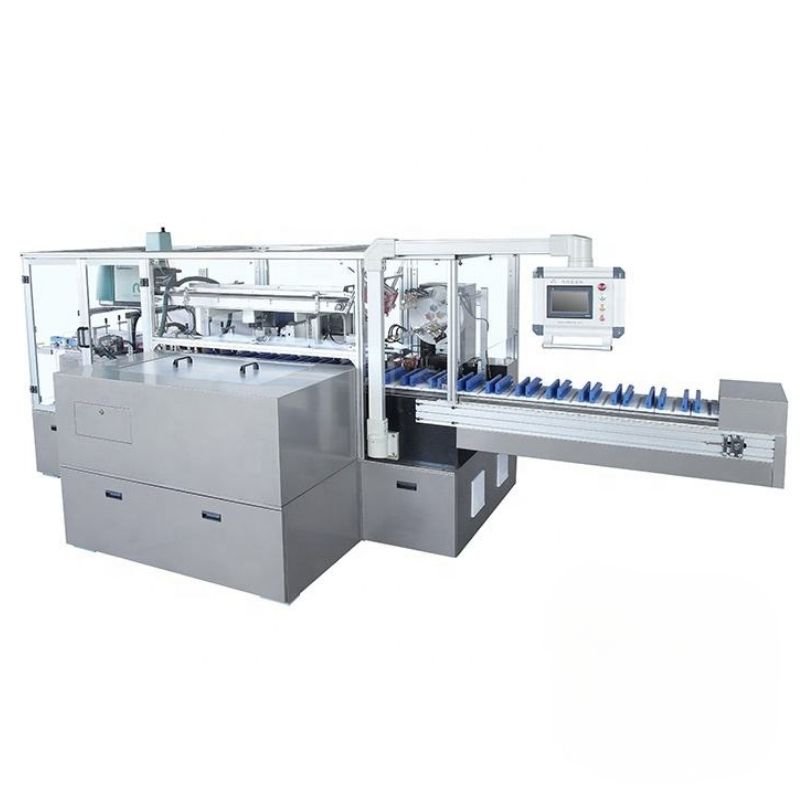
High-speed operation, smooth and efficient, designed for large volume production.
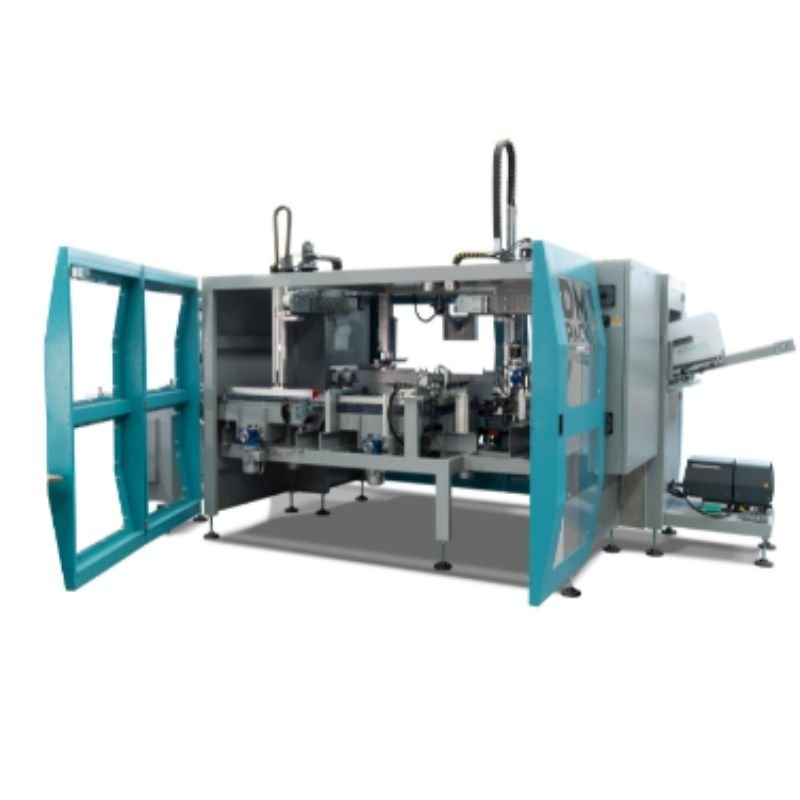
Step-by-step movement, flexible adjustment, suitable for multi-size and small batch production.
Advantages of Neocarton Cartoning Machines

Quick format change without tools, saves time and reduces operator effort.

Space-saving design, easy to fit into your existing production lines.

Precise motion control, smoother operation, and better consistency.

Open structure for quick cleaning and convenient maintenance.

Handles different carton sizes and materials with stable performance.

Automatic detection of missing products or cartons, reduces packaging errors.

Optimized structure for quieter running, improves the working environment.

Flexible configuration, easier part replacement and future upgrades.
Free Layout Design
Neocarton provides layout design services for the production line based on your products, production capacity, and space available in the plant. The positioning of equipment and its logistics can be planned to make the cartoning machine operate better with the other machines before and after it. This will also minimize modification and avoid wastage of money and time.


Automatic & Semi-Automatic Solutions
We provide automated and semi-automated cartoning machine solutions as your project requirements. Automations are ideal for high-volume and stable production, run in continuous mode, and eliminate manual involvement. Semi-automations have a relatively simple design and are more convenient for smaller and moderate volumes or manual cooperation situations. You are free to select based on the project requirements.
Hygienic Stainless Steel Construction
Our cartoning machines are made up entirely of a stainless steel structure that adheres to the hygiene requirements in the food and pharmaceutical industries. The surface is sleek, so it makes cleaning easy and prevents any accumulation of dust and residues. The parts of the equipment are also rust-proof and very reliable, even in continuous usage. You can use them with peace of mind in a high-hygiene production environment.
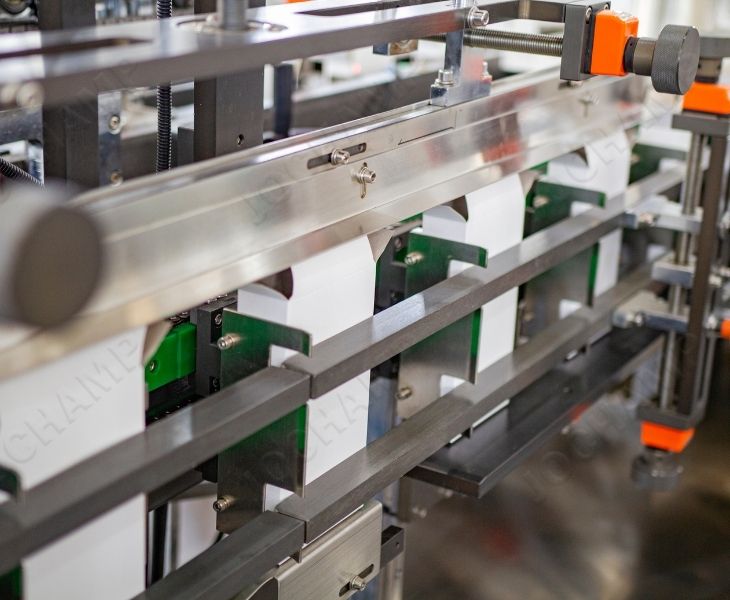
GMP & CE Compliant Cartoning Machine
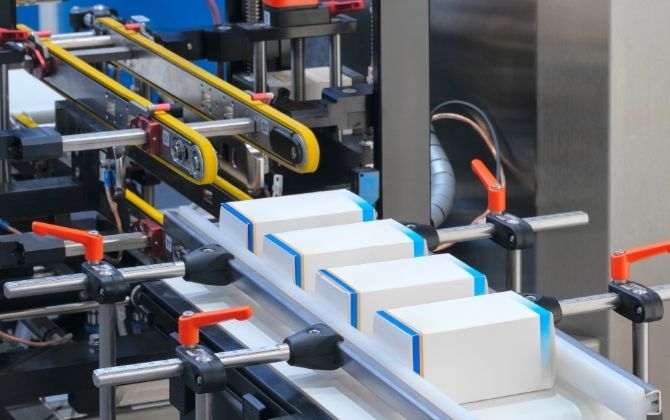
Our cartoning machines are manufactured in accordance with the GMP and CE standards. It is easy to apply to the food, pharmaceutical, and other industries requiring strict regulations. Our equipment also has a safe and reliable structure, which minimizes risks during manufacturing. Moreover, it enables you to easily pass through customer and third-party inspections, allowing the project to go ahead swiftly.
In addition, the electrical system is equipped with complete safety protection and will stop automatically when anything unusual happens. Reserved interfaces are also available for adding coding, labeling, or inspection systems, making future line upgrades simple and flexible.
Applications of Neocarton Cartoning Machine
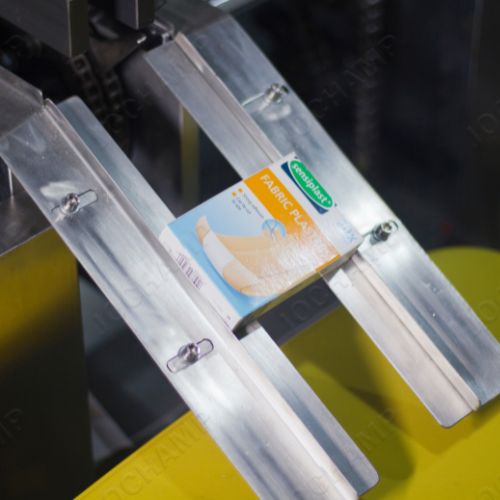
Our cartoning machines work well with blister packaging, pill containers, and capsule bottles. They are very reliable, and each packed box is intact and well-aligned. Machinery totally adheres to industrial standards.
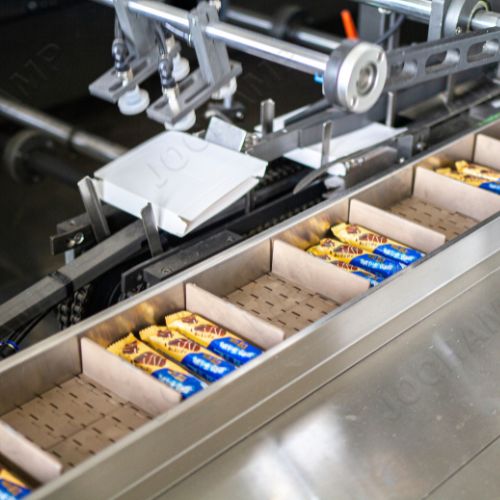
Biscuits, candies, snacks, and other food can be quickly packaged using our cartoning machines. The machines operate with precision, producing neat and attractive packages that enhance display appeal.
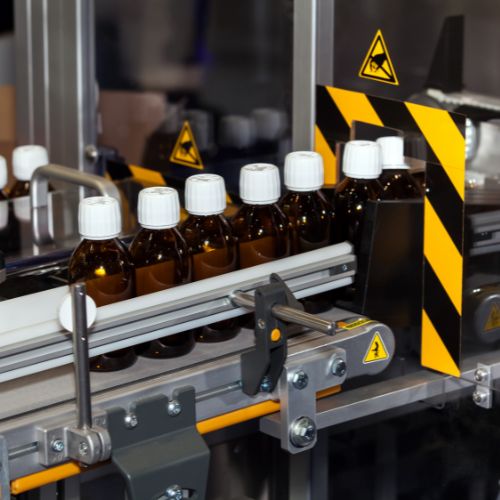
Our cartoning machines are also used for packaging bottled beverages, healthcare products, and cosmetics. The machinery accommodates bottles of various sizes and produces neatly sealed cartons that are convenient for logistics and retail display.
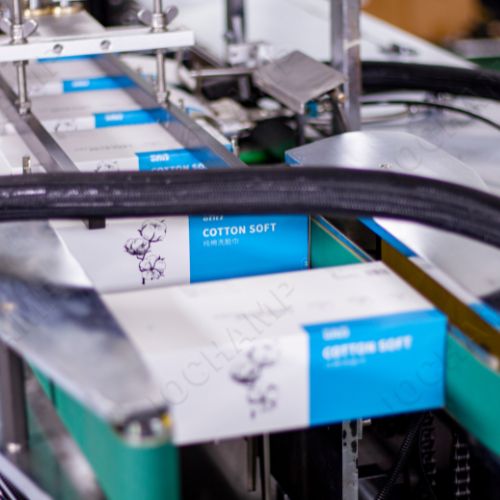
Our machine can also carton tube- or bottle-packaged products such as cosmetics, skincare products, and toothpaste. The machine has a compact design and is easy to operate, saving both space and labor.
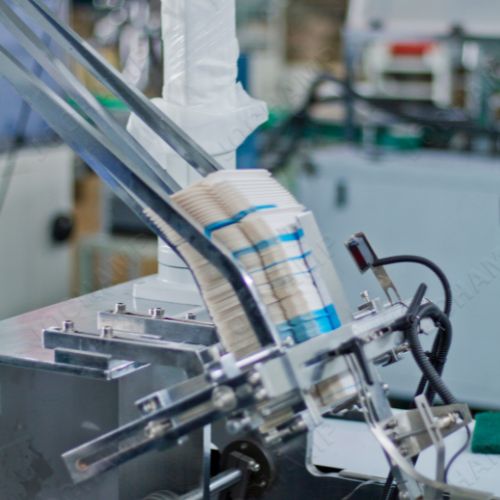
Household cleaning products such as detergents and disinfectants can also be packaged using our cartoning machines. They can handle various packaging formats and sizes and operate efficiently.
- Neocarton Cartoning Machine Specification
| Machine Type | Automatic / Semi-automatic |
| Cartoning Speed | 30–120 cartons/min |
| Carton Size Range | L(50–300) × W(30–200) × H(20–150) mm |
| Product Type | Bottle / Blister / Tube / Sachet |
| Power Supply | 220V / 380V, 50/60Hz |
| Air Consumption | 0.5–0.8 MPa |
| Machine Material | Stainless Steel |
| Control System | PLC + HMI |
| Dimension | Customizable |
The cartons are damp or warped—ensure the storage environment remains well-ventilated and dry.
The carton dimensions do not match the machine—adjust the hopper guide plates so that the gap is about 1 millimeter wider than the carton.
The sensor is obstructed by dust—wipe the lens of the photoelectric sensor regularly.
By checking in this order, most carton jams can be resolved in just a few minutes.
If the Carton suction system fails to pick up the boxes, it is usually due to a worn-out suction cup or an air leak. Check the suction cup for damage, wipe the surface clean, and then check if the air hose connector is loose.
If multiple boxes are picked up at once, it is usually because the boxes are stuck together. Shake the boxes loose in the box storage area and avoid packing them too tightly. At the same time, adjust the suction pressure to between 0.4 and 0.6 MPa.
The temperature is not high enough. Heat seal knife adjusted to 120-150℃ (depending on carton material).
Insufficient pressure. Check the trachea for air leaks.
Apply glue unevenly. Clean the glue tip and don’t let the glue dry out.
Under normal maintenance, a good cartoning machine can last 8 to 10 years.
Wipe the guide rails and sensors once a week, and add some oil to the transmission parts every month.
Inspect the suction cups, push heads, and other critical parts every 3-6 months, and it is best to keep one or two spare parts in your warehouse.
It is recommended to record the location and reason of each card box, so that the machine can be adjusted much faster in the future.
It usually pays back in 6 to 18 months, depending on production and labor costs. For example, a semi-automatic line requires 3 people. After replacing it with a fully automatic cartoner, 1 person can watch the machine, which is enough to save the wages of 2 people a year. If the factory works twice a day, the cost recovery speed will be faster.
How Does a Cartoning Machine Work
Step 1 – Carton Feeding
The cartoning machine removes the paper boxes one by one and sends them to the next station.
Step 2 – Carton Erecting and Forming
The flat paper box will be folded into a three-dimensional shape.
Step 3 – Product Feeding
The product enters the device via the conveyor belt, which must be in sync with the carton’s rhythm. If out of sync, there will be empty boxes or misalignment. The feeding methods for different products vary, and bottles, bags, and medicine plates will all use different feeding structures.
Step 4 – Product Insertion into Cartons
The machine precisely places the products into the boxes. This process requires accurate position and steady rhythm. As speed increases, the demand for control accuracy becomes greater, so servo systems are typically used for control.
Step 5 – Carton Sealing
Once the product is placed inside the carton, the next step is to seal the box. For interlocking flaps, the machine performs the snapping action automatically; other designs can be sealed using hot-melt adhesive. You can choose the appropriate method based on the product; for food items, adhesive sealing is preferable.
Step 6 – Inspection and Output
Once the boxes are sealed, the machine checks for empty boxes or missing items. If any defects are detected, the boxes are automatically rejected. Qualified products are then sent to the next stage for packing or palletizing.
Cartoning Machine vs Other Packaging Machines
Cartoning Machine vs Other Packaging Machines
Cartoning Machine vs Case Packer
If you are planning an entire packaging line, you first need to understand the role each machine plays. A cartoner packages the products in the carton that will go directly to the customer, while the case packer will package several boxes into a large box for transportation and storage.
If you only need to complete retail packaging for your products, you’ll need a cartoner. If you already have boxed products but also need to prepare them for logistics packaging, you’ll need to add a case packer. In many projects, these two machines are used one after another.
Cartoning Machine vs Wrapping Machine
If your products are packaged only in film(such as in bags or pillow packs), you may want to consider adding a cartoning machine.
Film packaging seals and protects your product, but its visual appeal is limited for retail. If you want your products to stand out more on the shelf, or if you need to include instructions, you’ll need to add a cartoning step.
Cartoning Machine vs Filling Machine
Filling machines fill products into containers, such as liquids into bottles, which is the first step in packaging. The cartoning machine is at the back, and the product that has completed the primary packaging is loaded into the carton.
If your product has not finished basic packaging, you should consider filling or sealing equipment first.
How to Choose the Right Cartoning Machine
Product Type and Packaging Requirements
Are your products bottles, bags, or solid items? Are their dimensions fixed? Do you need to include instructions, or pack multiple products into a single box? These will directly determine the packing method and the type of cartoning machine you choose.
Determine Required Production Speed (CPM)
You need to confirm the production target first, and the speed of the equipment should be consistent with the production.
If your production line itself is not very fast, choosing a high-speed cartoning machine will not bring improvement, but will increase costs. If your order volume is growing, consider higher speeds and avoid replacing equipment later.
Choose Between Automatic and Semi-Automatic
You can start by thinking about a question: How much labor do you want to reduce? If you have a lot of human involvement now and want to improve efficiency, a fully automatic device is more suitable. If your production is not large, or you are still in the trial production stage, semi-automatic equipment can also complete the task with lower investment.
Machine Flexibility and Size Changeover
This is important if you have a lot of product specifications. You need to pay attention to whether it is convenient to change the size, whether it requires a lot of manual adjustment, and how long it takes to change the specifications once. If the changeover is slow, it will affect the production rhythm.
This has little impact if you are producing a single product for a long time. But if there are many SKUs, this becomes a long-term cost.
Check Compatibility with Your Existing Line
Can this cartoning machine be connected to your current device? Do the sizes match? Can the control system be linked? If docking is difficult, a lot of debugging time will be added.
At Neocarton, we usually help you take these issues into account in advance, and customized solutions can solve this problem for you.
Consider Compliance and Industry Standards
If you are in the pharmaceutical, food, or export business, this part cannot be ignored. For example, the pharmaceutical industry has clear specifications for equipment, and some markets require CE or other certifications.
If not considered in the early stage, it may affect project implementation or customer acceptance. We suggest that you confirm the requirements of the target market in advance before selecting equipment.