Neocarton-Your Reliable Robotic Case Erector Manufacturer in China
Robotic case erectors automatically erect and seal cartons through programmable robotic motion control. With robust structures, it operates well in high-volume manufacturing and distribution environments. The robotic system handles different products and cartons through flexible robotic handling paths, increasing production efficiency and reducing human errors.
Compared to conventional case erectors, robotic arms automatically adjust gripping positions for different carton sizes and layouts, saving space and changeover downtime.
The machine is used in the food, pharmaceuticals, daily chemicals, and automotive components industries. Whether high-volume production or packaging lines with multiple specifications, we offer customized solutions to help you optimize the packaging process and reduce costs.
Our Products
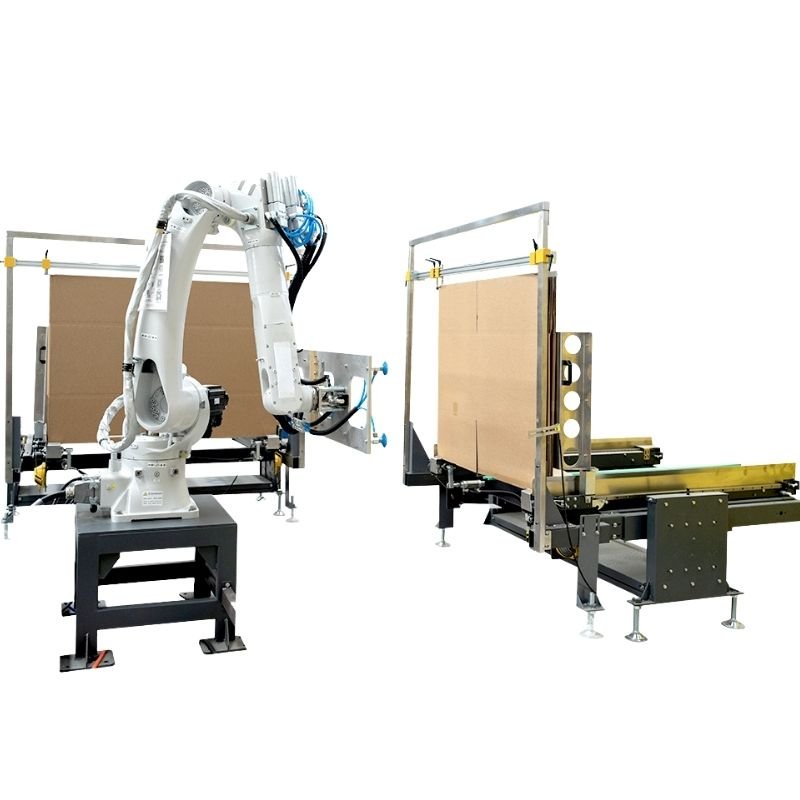
It moves highly free in multi-dimensional space and easily handle complex cartons with socket type, full stack lid or inner lining. It is used for e-commerce and logistics production lines.

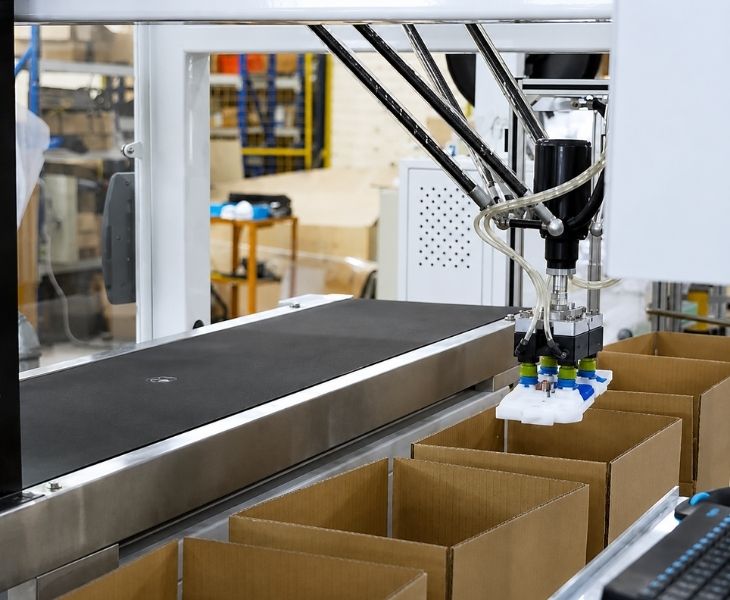
Parallel robots perform reciprocating actions within a small range to pick up and open cartons. It has fast erecting speed and is suitable for small cartons for lightweight consumer goods.

SCARA moves at high speed horizontally, and has a micron-level compression rigidity in the vertical Z-axis direction, ensuring no skew of electronic or medical-grade precision small cartons.
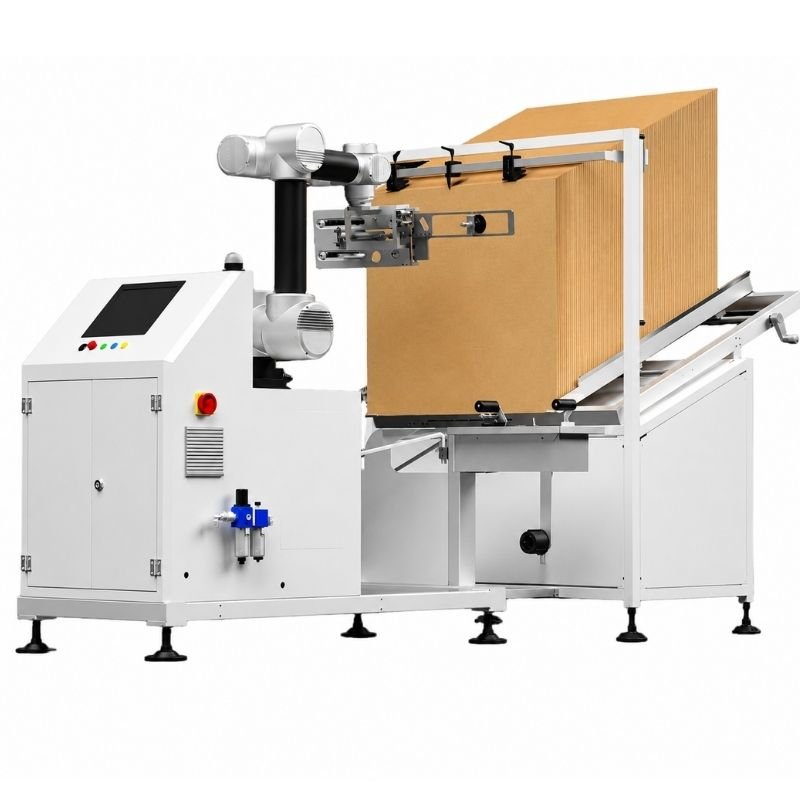
Each joint of Cobot is equipped with a high-precision torque sensor to sense cardboard resistance. It accommodates various defective cardboards, reducing the scrap rate.
Features of Robotic Case Erector

Industrial robots have repeatability of ± 0.02mm and keep all movement trajectories almost the same, which makes the formed cartons square and the tapes evenly adhered.

The machine maintains stable operation in high-intensity 24/7 production. It perfectly connects with upstream high-speed production lines, suitable for large-scale packaging manufacturers.

Intelligent sensing systems monitor carton positioning in real time and automatically correct it, improving line stability for packaging suppliers handling multiple cartons.

The fixed robot base reduces vibrations and displacements at high speed, extending the machine’s service life and lowering the long-term wear and maintenance costs for you.
Compatible with Products of Multiple Specifications
The robotic case erector forms up to 8 cartons of different sizes at once without manual adjustment. It avoids downtime when switching, suitable for growing manufacturers with changing packaging requirements.
The robot uses adaptive EOAT for flexible carton handling, which grasps and assembles multiple carton formats without dedicated forming equipment, thus saving floor space and the purchasing cost of unpacking machines.
Long-term Unmanned Operation
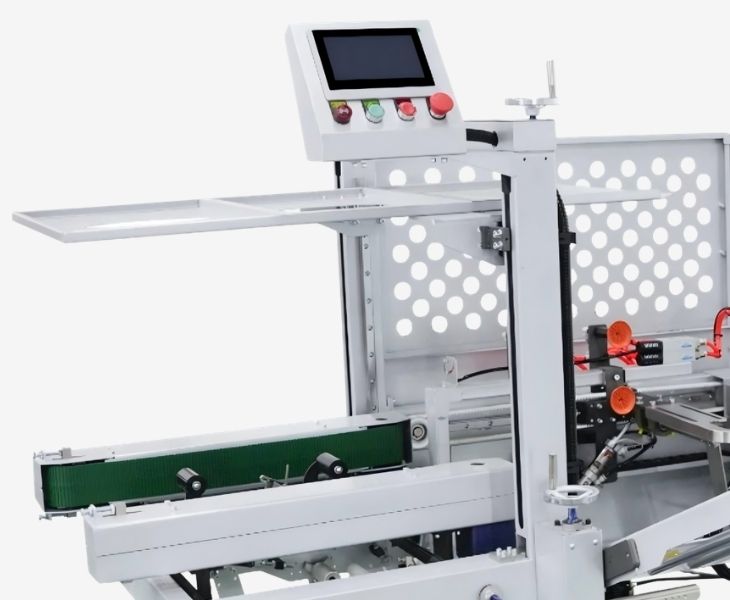
To follow the automatic trend of modern factories, robotic case erectors are equipped with large-capacity silos and integrated sensing and motion coordination systems. They support unmanned autonomous operation while maintaining stable carton forming. This unmanned operation avoids labor reliance and helps you build an intelligent factory.
Applications of Robotic Case Erector
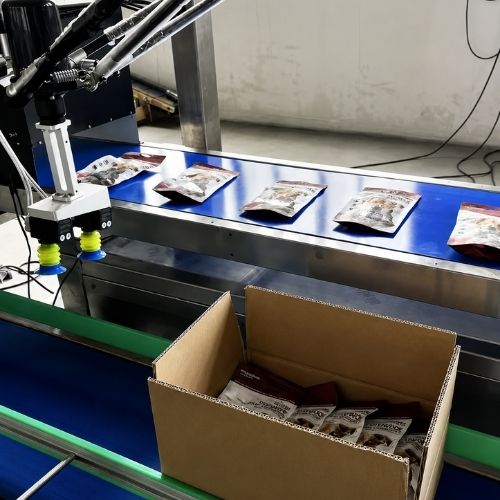
The demand for food and beverages varies greatly in different seasons. Robots dynamically adjust motions for different package formats, from heavy beverages to lightweight puffed food, helping food manufacturers respond quickly to peak season markets.
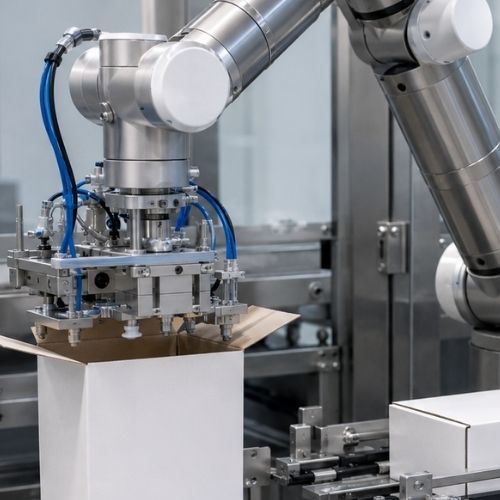
To meet hygiene and compliance requirements, it uses a stainless steel body to avoid the generation of metal dust and debris. Its robotic arm precisely erects and seals the medicine boxes, helping pharmaceutical companies to meet GMP standards.

Consumer goods such as electronic products, cosmetics, and household items are updated quickly. Robotic case erector supports one-click line changeover within two minutes. The robot system complies with hundreds of new carton types in the future after further upgrades.

Auto parts are heavy and are packed in heavy-duty cartons. The machine uses high-payload large-load arms and EOAT to handle heavy cartons, ensuring the packaging quality of automobile parts and reducing work-related injury compensation in heavy-load applications.
- Specifications
| Performance | Speed | 10 – 25 CPM |
| Case Types | RSC, HSC | |
| Sealing Method | BOPP tape or hot melt adhesive | |
| Size Range | Min. Case Size | 200 × 150 × 100 mm (L \ W \H) |
| Max. Case Size | 600 × 400 × 500 mm(L \ W \H) | |
| Hardware | Robot Base | 6-axis industrial robot / 4-axis high-speed palletizing robot |
| EOAT | Adaptive vacuum gripper system | |
| Magazine Capacity | 100 – 150 Flat Cases | |
| Controls | PLC | Modular programmable controller |
| HMI | 7-inch / 10-inch full-color industrial touch screen | |
| Power Supply | 380V / 3 phases / 50-60Hz | |
| Safety | Safety Guard | Aluminum profiles / stainless steel frame + High-strength acrylic / interlocked safety guarding |
| Certifications | CE certification / ISO9001 / Industrial safety standards |
We offer rich configuration options, including high-speed industrial robots, Nordson hot melt adhesive systems, high-precision visual recognition systems, and automatic feeding bins with larger capacity.
According to your product characteristics, factory space, and investment budget, our engineers will customize packaging solutions.
Our system supports a one-click quick line change, and the entire process only takes 2 to 5 minutes.
Operators only need to change formulas on the HMI touch screen, and the robot automatically adjusts the movement trajectory without tools. For multi-variety packaging lines, it ensures the high overall equipment efficiency of the entire line.
Not high. Traditional erectors are easy to jam if cartons are soft, damp, or deformed. Our robot is equipped with an intelligent vacuum suction cup, and its suctioning and pulling actions correct the indentations on the carton. It deals well with thin, slightly warped cartons and prevents downtime caused by carton feeding.
Not large. The compact mechanical layout minimizes floor space requirements, and the footprint is smaller than that of traditional unboxing machines at the same speed. It easily connects other equipment in your production line, saving you additional investment in expanding the workshop.
Yes. The robot has a flexible robot motion range. We customize the feeding direction of the storage bin and the unloading direction of the carton according to your factory layout.
After receiving the machine, it can operate synchronously with the entire production line within a very short time, accelerating full production ramp-up.
It’s very simple. Operators can easily start and manage the system through the HMI.
The robot is designed for low maintenance and daily maintenance only requires cleaning the vacuum filter and replenishing the packaging consumables.
We offer remote diagnosis, and your machines can operate efficiently throughout the machine lifecycle.
Our system obtains CE certification to help you avoid work-related injury risks.
There are high-strength safety nets and protective doors around the machine. Once the door is opened, the robot will immediately stop.
In the carton loading area, we install photoelectric sensors. When employees replenish the cartons, the robot’s operating speed will automatically decrease or stop.
What Is A Robotic Case Erector?
A robotic case erector uses mechanical arms and claws to automatically assemble, fold, and seal cartons, ensuring cartons are square and meet factory standards. Automation packaging also eliminates high-intensity and high-activity labor, saving labor costs for you.
Core Components of The Robotic Case Erector
Robot Base
Compared with the linear reciprocating motion of traditional erectors, the robotic system provides flexible multi-axis motion control. It is suitable for different carton specifications and improves the tolerance rate of your packaging line for carton quality.
Due to the highly integrated servo reducer, the maintenance of the robotic case erector is very simple, saving you spare part costs.
Adaptive End Effector
Due to the adaptive end effector, robots efficiently grasp, shape, and fix cartons of various sizes, saving you the purchasing cost of dedicated assembly machines and reducing the floor space.
The flexible surface contact adsorption ensures no scratches when picking up high-end cosmetics or electronic products, thus protecting the brand image of high-end products.
Robot Controller and Intelligent Control Algorithm
The robot controller and intelligent motion algorithms continuously optimize robotic movement paths in real time, achieving synchronized operation with upstream and downstream equipment.
It supports mainstream industrial communication protocols and uploads core data to the MES/ERP system, helping you build an intelligent factory.
How to Choose a Robotic Case Erector?
Flexible Expansion Capability
The robotic case erector needs to meet the current carton sizes and accommodate new carton types in the future. We recommend a robotic case erector that supports one-click formula switching and has high EOAT adaptability.
Carton Compatibility
Carton quality varies due to inconsistent storage environments, easily causing jamming. We recommend robotic case erectors with error prevention mechanisms. Their high fault tolerance rate effectively eliminates uncertainty caused by raw material fluctuations.
Digital Integration Capability
The robot controller should support mainstream industrial communication protocols such as Profinet and EtherNet/IP. The robot system uploads data such as unpacking speed, material reserves, and faults to the enterprise’s MES or ERP system in real time, achieving remote transparent control.
Total Cost of Ownership
Except for the initial purchase cost, the later operation and maintenance costs are more important in the total cost of ownership. Higher MTBF significantly reduces long-term maintenance costs. We recommend machines with standardized first-line brand robots, which have industrial-grade quality and extremely low power consumption. You can recover the cost within 12 to 18 months of operation.