Your Reliable End Load Cartoner Manufacturer in China
Neocarton end load cartoner is an automated device specifically designed for continuous high-speed packaging of regular products. We design our system to automatically arrange and feed products into cartons through a horizontal side-loading system. The horizontal side-loading method ensures stable and continuous operation with fewer jams and interruptions, so as to better match the operation of the high-speed production line and help you greatly improve the overall packaging efficiency.
Through optimised structural design and stable push logic, Neocarton ensures that the products are neatly arranged and unified before entering the box, reducing manual operation errors and effectively avoiding problems of misloading and missed loading. Helps to improve the quality of packaging while also creating a better brand image for you. Feel free to contact us to provide you with exclusive, customised solutions.
Types of Our End Load Cartoner
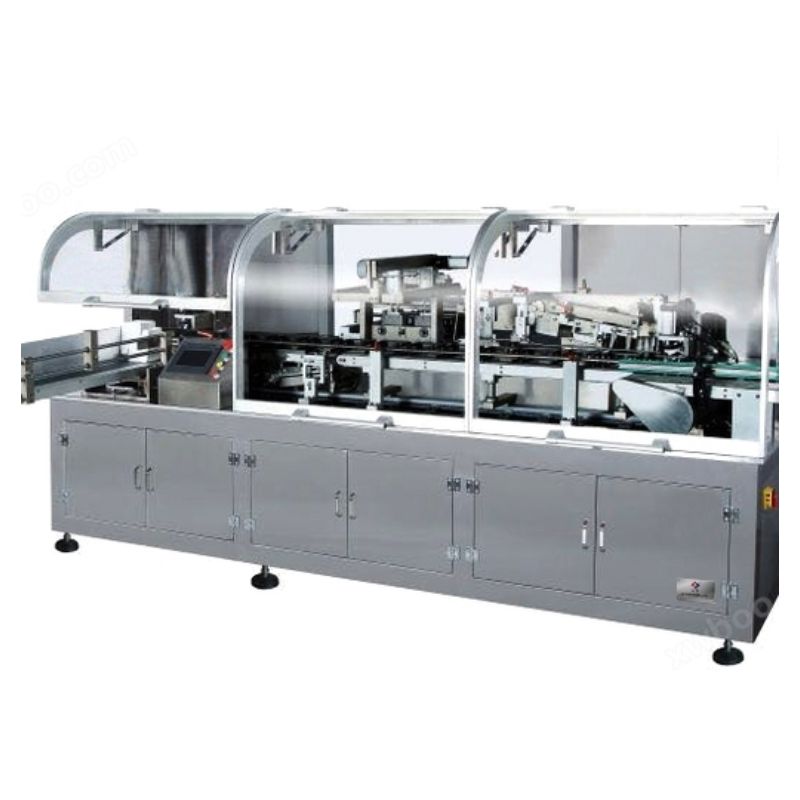
A single row of product feed occupies a small space. Suitable for single specification, moderate batch production line.

Multiple columns of products are fed simultaneously, covering a large area. Match high-speed, high-yield, continuous production lines.

Customised structure according to your need, size, shape, process, support complex, special shape, and multi-process combination production line.
Stable and High-Speed Production
Neocarton end load cartoners deliver products stably to the lateral cartoning station via a horizontal side push conveying surround synchronous feeding system. Unify the beat throughout the opening, pushing and loading of the box. The whole process is coordinated by PLC beat control and synchronous conveying system, effectively avoiding problems such as product accumulation, material jam, beat disorder, etc., to ensure the stable and high-speed operation of your production line.


Accurate and Consistent Cartoning
Our end load cartons use lateral push-in combined with servo push-in control, specifically designed to control horizontal lateral push-in movements, including precise control of box opening, push-in and positioning. When in operation, the sensor will detect the product position and carton status in real time, and make corrections before each lateral push to ensure that the product is accurately put into the box. Reduce the problems of mis-packing, leakage and product offset caused by traditional cartoning machines falling into boxes. Helps you significantly improve overall packaging consistency and product conformity.
Flexible Adjustment for Different Products
Our end Load Cartoner adopts the design of stable opening and closing and retaining structural support to keep the carton in a fixed form during conveying and loading, and is not easy to deform. We have also made a modular design optimised for side-loading, so that the equipment can quickly adjust the guide rails and feed channels according to different product specifications, so that the products can stably enter different sizes of cartons during the horizontal conveying process. With the overall design like this, your production line has higher flexible adaptation capabilities in replacement and multi-specification production, and the overall input cost can also be reduced.
Quality Control Ensures a Stable Long Run


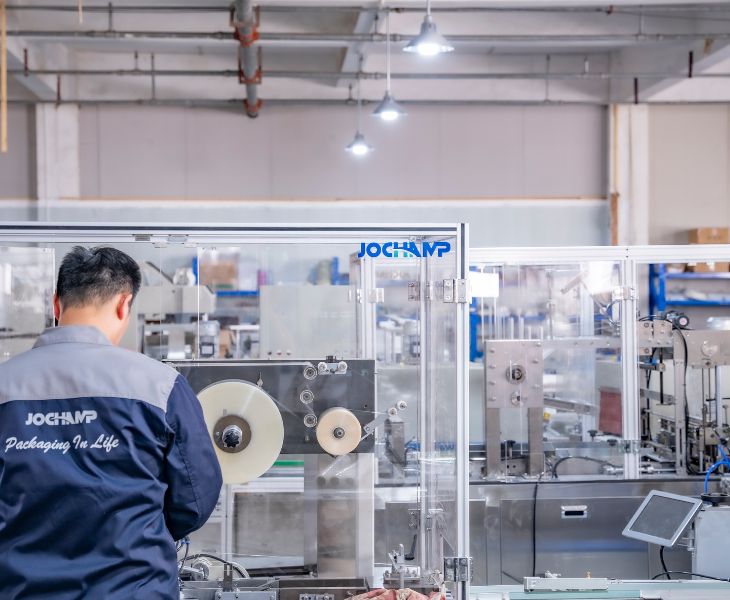
Neocarton implements full-process quality control for the end load cartoner’s lateral push-in structure. All key components are tested for size and material before being put into storage to ensure compliance with standards. During the assembly process, focus on checking the guide rail installation accuracy and sensor installation position to ensure that each step meets the tolerance requirements.
Before the equipment leaves the factory, we will conduct multiple rounds of lateral capping tests. Mainly verify the push material stability, beat coordination, and control of sensors and control systems to ensure accuracy in place before each box entry. At the same time, the whole machine will be subjected to continuous operation tests to ensure stability in high-speed conditions, so that you can operate your efficient production line with peace of mind.
Applications of Our End Load Cartoner
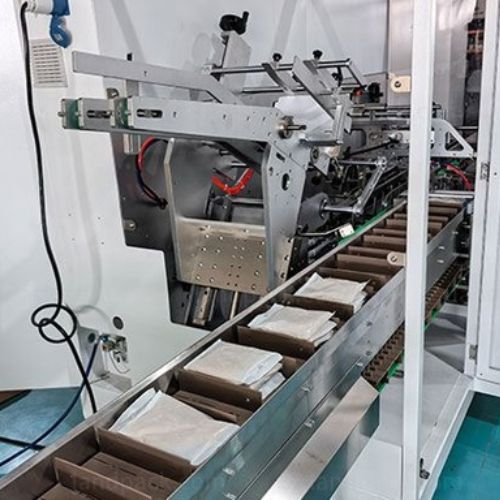
Food packaging needs regular shapes like cookies, chocolate bars, and instant foods. Our end load cartoner can meet this need by implementing a continuous, regular arrangement of packages. It improves your packaging efficiency and ensures packaging consistency.
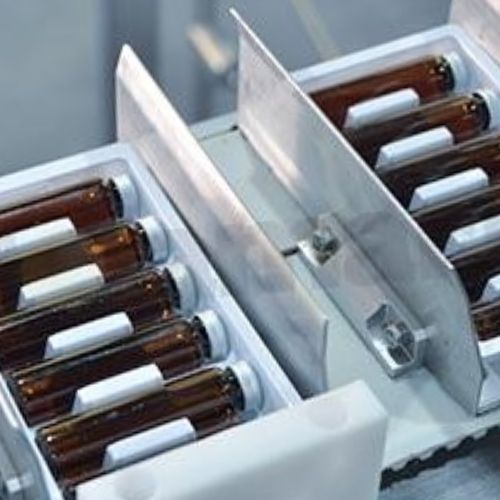
Drugs such as blister packs, tablets, and medical consumables require strict size, precision, and consistency. No misloading or missing parts. Neocarton end load cartoner meets pharmaceutical packaging needs, helping you produce stably, efficiently, and confidently.
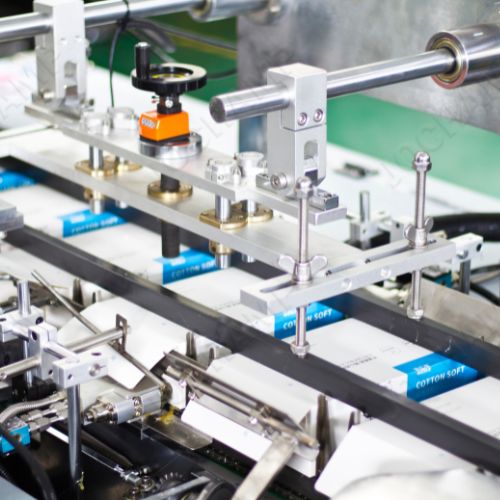
Personal care products have various specifications. Products like toothpaste, skincare sets, and masks come in single or combined sizes. Traditional cartoners are inefficient. Our end load cartoners help you pack them efficiently and keep packages in good shape.
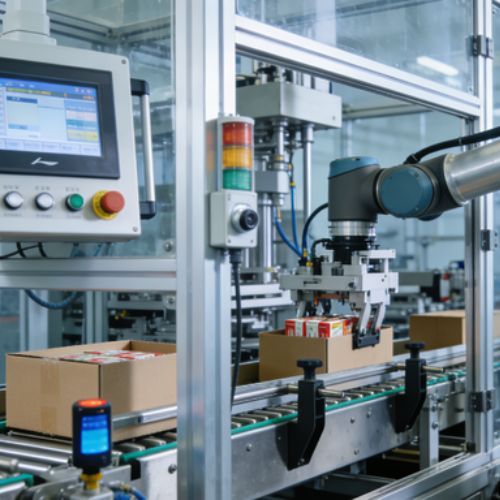
Many electronic products are small, like data cables, batteries, and connectors. Manual packing often makes mistakes. Neocarton end load cartoners can sort and pack them automatically. It improves packaging efficiency and consistency, making your packaging more standardised.
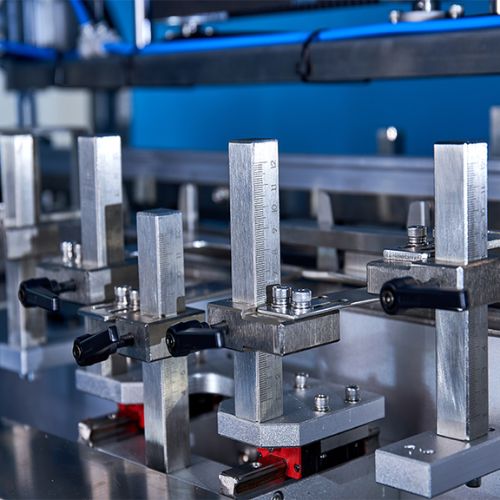
Products in this industry are mostly small standard parts, like tool sets and repair kits. There are many and repetitive. Our end load cartoners can pack them automatically. This makes packaging more standard and uniform, and cuts labour costs.
- Specification
| Item | Specification |
| Machine Type | End Load Cartoner (Horizontal Side-Loading Cartoning Machine) |
| Production Capacity | 60–150 cartons/min (stable continuous operation) |
| Max Speed | Up to 150 cartons/min (depending on product size and configuration) |
| Suitable Products | Regular-shaped products (food, pharmaceuticals, cosmetics, electronics, etc.) |
| Cartoning Type | Horizontal side insertion (End Loading) |
| Carton Size Range | L: 80–250 mm / W: 30–120 mm / H: 15–80 mm (customizable) |
| Packaging Format | Single or multi-piece combination packaging |
| Pushing System | Servo-controlled horizontal side push system |
| Control System | PLC control + HMI touch screen |
| Drive System | Full servo-driven (key motion sections) |
| Infeed System | Synchronised conveying system |
| Changeover Time | 15–30 minutes (depending on product type) |
| Power Supply | 380V / 50Hz / 3 Phase |
| Power Consumption | 3–6 kW (depending on configuration) |
| Air Pressure | 0.5–0.7 MPa |
| Machine Dimensions | Approx. 4000 × 1500 × 1800 mm (customizable) |
| Machine Weight | Approx. 1500–2500 kg |
| Packaging Accuracy | ≥99% |
| Line Integration | Compatible with fully automated production lines |
This is usually related to the product not being arranged properly, uneven pushing force, out-of-sync conveying rhythm, improper guide rail adjustment, or the carton not opening properly. You can greatly reduce these types of problems by adjusting equipment parameters and maintaining a steady feed rhythm.
The space required is affected by the equipment’s speed, the degree of automation, and whether it is integrated into a full line. The equipment body generally occupies an area of about 4-7 meters and is 1.5-2 meters wide. High-speed models will have a longer structure. At the same time, the connection space between the front and rear end devices must also be considered.
Including the feeding area, packing area, and output area, a total of 3-6 meters of straight space needs to be reserved. For ease of maintenance in the future, 0.8-1.2 meters need to be left on the operating side and 0.6-1 meters on the maintenance side.
Maintenance methods include daily inspection, regular maintenance, and in-depth maintenance. The contents of daily inspection include whether the air pressure is stable, whether the conveyor belt is running smoothly, whether there is any material stuck, etc.
Regular maintenance frequency: Basic maintenance is performed every 1-2 weeks. Deep maintenance carries out comprehensive inspection and maintenance every 3-6 months to ensure the stability and safety of long-term operation.
It may be a quality or structural problem of the carton itself, such as the carton is too soft, the crease indentation is not clear, the size tolerance is too large, etc
It may also be because the suction box or opening mechanism is unstable. Wear on the suction cup or insufficient suction, unstable air pressure, these can cause box opening failure.
End load cartoner is suitable for cardstock or lightweight cardboard materials with moderate stiffness, stable forming, and consistent size, which can ensure smooth opening and stable pushing. The specific materials are white cardboard, single copper paper, grey-based whiteboard paper, and light corrugated cardboard.
End Load Cartoner vs Top Load Cartoner
The biggest difference between these two cartoning machines is the way the product enters the carton. The end load cartoner uses a horizontal sideways push-in method, while the Top Load Cartoner places the product into the carton from above, usually by grabbing or dropping it to complete the carton.
| Item | End Load Cartoner | Top Load Cartoner |
| Loading Method | Horizontal side insertion (end loading) | Vertical top loading (pick & place OK) |
| Suitable Products | Regular, easy-to-align products | Irregular or fragile products |
| Operation Mode | Continuous motion | Mostly intermittent motion |
| Stability | High, less product shifting | More affected by product positioning |
| Speed Performance | Stable high-speed (60–120 cartons/min) | Can reach high speed, but more complex structure |
| Typical Applications | Food, pharmaceuticals, and daily chemicals | Mixed or complex product packaging |
End Load Cartoner vs Wrap Around Cartoner
The main difference between the two devices is the different way the carton is formed. The cartons used by the end load cartoner are already formed, and the device loads the product into the box by pushing it horizontally, making the entire process more flexible. The carton used by the wrap-around cartoner is flat cardboard, which is formed directly around the product package and is produced on-site.
| Item | End Load Cartoner | Wrap Around Cartoner |
| Carton Type | Pre-formed cartons | Flat blanks (formed around products) |
| Packing Method | Products inserted into cartons | Carton wraps around products |
| Material Cost | Standard | Can reduce material usage by 15%–30% |
| Suitable Products | Single or multi-piece packaging | Grouped or bundled products |
| Flexibility | High (supports multiple SKUs) | Lower (more customised setup required) |
How to Choose the Right End Load Cartoner
Choose the end load cartoner that really suits you, and don’t just focus on price and running speed. The key is whether the equipment can match your production line.
You first need to judge whether the product can fit the lateral packaging structure. If not, the product cannot be arranged neatly and stably, and problems will occur in subsequent operations.
On the basis of product adaptation, we will consider whether the production capacity is matched to see whether it can be consistent with the production line rhythm. This is the key to ensuring long-term stable operation. Simply pursuing speed may lead to equipment failure and frequent downtime.
If the product is adapted and the production capacity and production line beat are consistent, then it is time to focus on the stability of equipment operation. There are several reasons that affect stability, such as the type and size of the carton, whether the pushing material is smooth, and whether the positioning is accurate. These will cause the equipment to easily jam and misfire.
Another easily overlooked but important concern is whether the equipment can match the production line. It must work in conjunction with front-end and back-end devices.
In addition to this, you also have to consider the spatial layout. You need to plan for the footprint of your equipment and the amount of space required for operation, in case late adjustments result in unnecessary additional costs.
Finally, you have to consider the cost of long-term operation and maintenance. Good equipment can operate stably and is easy to maintain, helping you save costs and production efficiency for later use.